
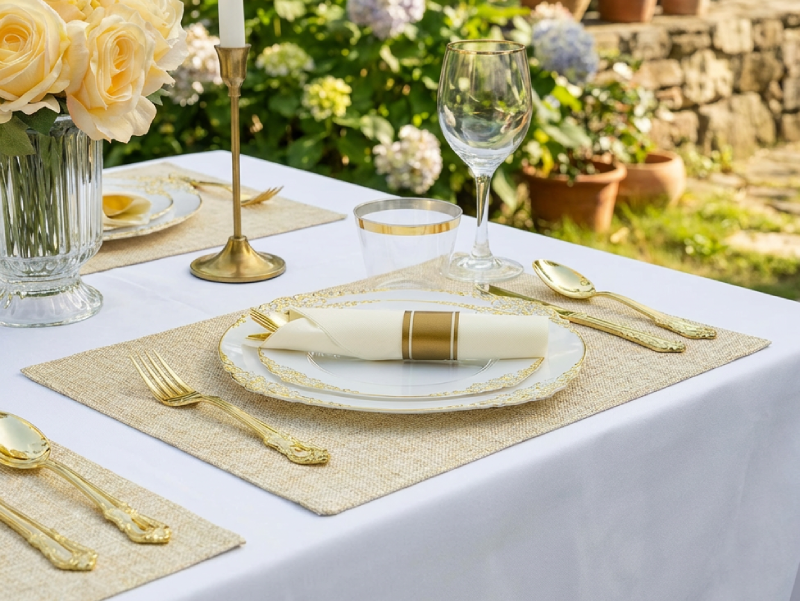
For large-scale events and high-volume hospitality, disposable tableware is a strategic decision for cost control and operational efficiency. However, the market is saturated with low-quality options that pose significant risks—from shipping delays to food safety compliance issues (FDA/PFAS).
Selecting the right partner isn’t just about finding the lowest price; it’s about ensuring material integrity, aesthetic consistency, and supply chain reliability.
Key Takeaways for Your Procurement Strategy:
Material Science: Why PS (Polystyrene) and Sugarcane Bagasse are the industry gold standards.
Cost Drivers: Understanding the impact of weight, metallic finishes, and tooling on your bottom line.
Risk Mitigation: How our U.S.-based fulfillment centers eliminate international lead time volatility.
Compliance: Ensuring all products meet FDA and BPA-free standards for the North American market.
Redefining Disposable Tableware: Beyond "Single-Use"
In a professional B2B context, “disposable” does not mean “cheap” or “wasteful.” At YISOO, we define it as One-Way Hospitality Solutions. For procurement managers, these products are tactical tools designed to:
Eliminate Labor Costs: Zero post-event cleaning, drying, or inventory re-sorting.
Ensure Hygiene: Guaranteed sterile, virgin-material products for every guest.
Optimize Logistics: Lightweight, stackable designs that reduce shipping costs and storage footprints.
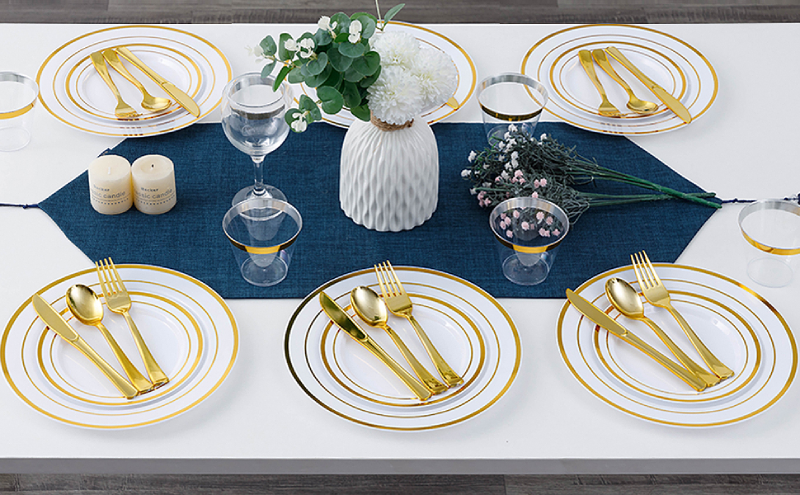
Whether you are planning a high-end wedding or a 5,000-pax corporate gala, the goal is to provide a Premium Place Setting that mirrors the visual quality of China while offering the logistical ease of high-performance polymers.
Common Materials Used in Disposable Tableware & Cost Logic
Common Material Options and Use Logic
In procurement, the material of disposable tableware directly affects unit cost, supply stability, and usage limitations.
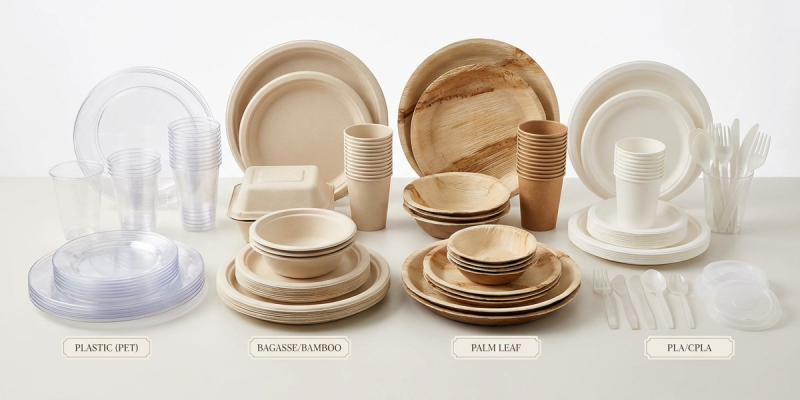
The following table shows some of the most commonly used materials in events and catering scenarios, along with their characteristics:
| Material | Relative Cost Level | Typical Use Cases | Procurement Notes |
|---|---|---|---|
| Plastic (PS / PP / PET) | Low | Cold food, beverages | Differences in rigidity, clarity, and heat resistance |
| Bagasse / Bamboo Pulp | Mid | Hot meals, main courses | Moisture resistance and load-bearing vary by formulation |
| Palm Leaf | Mid–High | Buffets, display-focused events | Natural texture variation; size consistency should be confirmed |
| PLA / CPLA | Mid–High | Selected positioning-driven events | Limited temperature tolerance; must match use conditions |
From a procurement perspective, material differences are not just about appearance. They determine whether the tableware can perform well under specific serving, handling, and timing conditions.
Why Costs Vary Even Within the Same Material
In procurement, significant price spreads often exist between tableware made from the same material. In the case of PS (Polystyrene) dinnerware, these cost variances are primarily driven by the combined impact of the following factors:
Gram Weight & Structural Rigidity: The most direct factor is material density. A standard 10.25″ PS plate can vary from 45g to 65g. Lower-weight plates lack “structural rigidity.” Under the heat and weight of a full dinner entree, lightweight plates can flex or collapse, leading to spills and guest dissatisfaction.
Precision Tooling: The “touch and feel” of a plate are determined by the quality of the injection mold. Low-cost manufacturers use aged or low-precision molds, resulting in “burrs” or “flash” (sharp plastic shards) on the edges.
Surface processing technology: That elegant gold rim isn’t just paint—it’s an industrial process. Inferior “gold” finishes can flake off during use or react with acidic foods. Our high-adhesion stamping is scratch-resistant and food-safe, maintaining its luster throughout the event.
100% Virgin Material: Some suppliers mix recycled scrap to lower costs, which can result in a yellowish tint and, more importantly, the presence of heavy metals.
For this reason, comparing suppliers solely on unit price is rarely effective.
A more reliable approach is to evaluate material choice together with use scenario, loss rate, and total delivery cost.
Configuration Recommendations by Use Scenario
Different event scenarios have different demands on disposable tableware.
A well-matched configuration is often more important than the choice of a single material of tableware from a procurement perspective.
Below are recommended combinations based on common use scenarios, focusing on execution reliability and risk control.
Weddings & Social Events
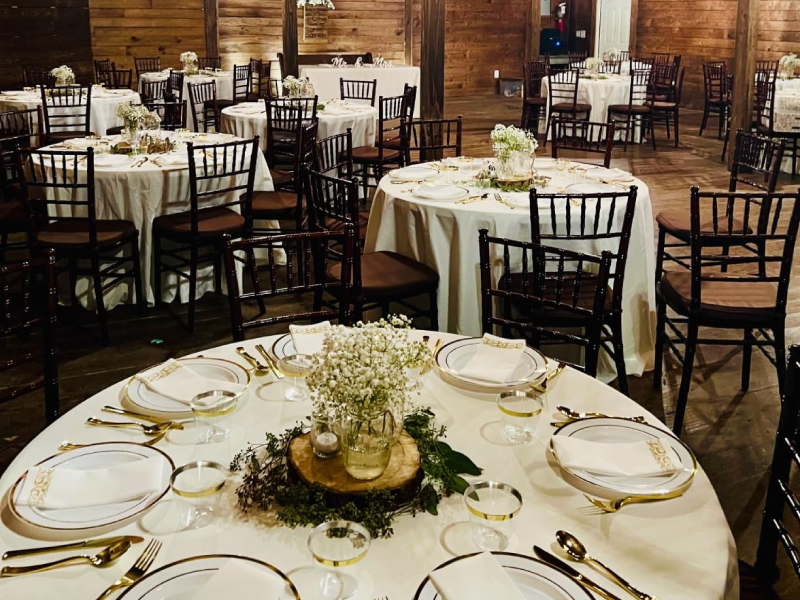
Focus 1: Aesthetic Synchronization
For premium weddings, visual consistency is non-negotiable. Procurement must ensure that the “Gold Tone” of plates, cutlery, and cups matches perfectly.
- Strategy: Source all items from a single production batch or supplier to avoid “metallic variance” caused by different hot-stamping techniques across different factories.
Focus 2: Buffer Allowance
Unlike corporate events, weddings are high-stakes with zero room for error.
- Always factor in a 10-15% buffer above the final guest count. This isn’t just for breakage; it’s a safeguard against last-minute RSVP additions that cannot be covered by international lead times.
Large-Scale Corporate Events (1,000+ Pax)
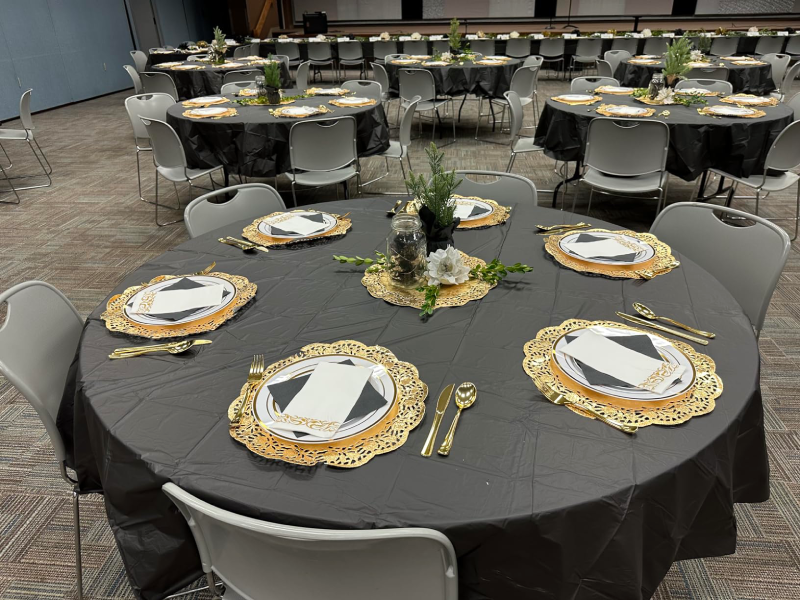
Focus 1: Operational ROI & Labor Savings
In large-scale catering, the true cost isn’t the plate—it’s the labor.
Strategy: Calculate the ROI of “One-Way Solutions” versus traditional rentals. Using high-end disposables eliminates post-event washing, sorting, and return logistics, typically reducing total operational overhead by 30%.
Focus 2: Case-Pack Optimization
Efficiency at the venue depends on how fast the catering team can deploy the table settings.
Strategy: Align your order with Full Case Counts. If a box contains 50 sets, round your order to the nearest case. This allows for rapid inventory counting on-site without opening boxes, minimizing handling errors.
Supermarket Retail & FMCG Channels
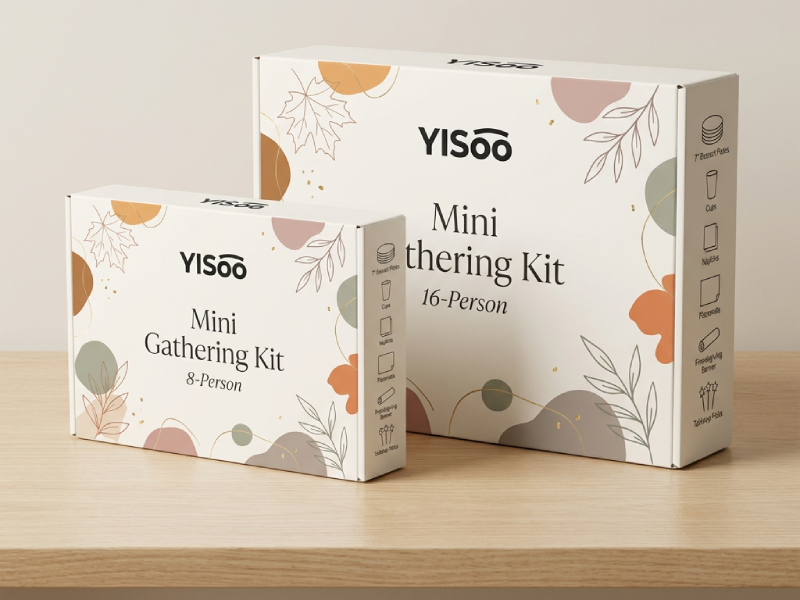
Focus 1: SRP (Shelf-Ready Packaging)
Retail buyers prioritize “Labor-Free” merchandising.
Strategy: Opt for SRP (Shelf-Ready Packaging) with clear windows and pre-printed UPC barcodes. The packaging should explicitly state “Serves 25” or “50 Piece Set” in high-contrast fonts to speed up the consumer’s decision-making process.
Focus 2: Inventory Velocity via Local Fulfillment
Supermarket margins are tied to inventory turnover.
Strategy: Leverage our U.S. Local Stock to implement a “Just-in-Time” replenishment model. Instead of committing to a 6-month bulk import, retailers can order smaller, high-frequency batches to optimize cash flow and reduce warehouse carrying costs.
Wrapping Things Up
In summary, the procurement of disposable tableware is a strategic assessment of efficiency and aesthetics. A successful procurement strategy requires not only a precise understanding of material specifications (such as weight, structural stiffness, and compliance), but also a comprehensive assessment of cost drivers and supply chain stability. If you need more advice on procurement before you start, then you’ve come to the right place! Please contact us and let us help you achieve your goals.
FAQ
Mixed configurations may be possible depending on the selected products and minimum order quantities (MOQ).
Availability and delivery times may vary by product, so we recommend confirming these details during the quotation stage.
For standard stock products, we strictly adhere to specifications to ensure consistency in dimensions and fundamental performance.
For decorative or custom products, slight variations may occur between production batches. If high consistency in appearance is required, we recommend confirming specifications in advance.
Before finalizing procurement, buyers are generally advised to confirm:
- Final configuration and item list
- Quantity requirements, including buffer allowances
- Applicable MOQ
- Lead time and delivery window
- Stock availability versus made-to-order items
Clarifying these points early helps reduce last-minute adjustments and execution risks.
Adjustment feasibility depends on:
- Whether items are available from local stock
- Current inventory levels
- The time remaining before the event date
For buyers with fixed schedules, it is recommended to match configurations with existing inventory whenever possible.